

The global mining industry continues to expand, driven by rising demand for coal and industrial minerals. Operators face increasing pressure to enhance efficiency, reduce operational costs, and maintain consistent product quality. Traditional wet-processing systems may be unsuitable for certain minerals or remote locations due to water scarcity, high energy consumption, and maintenance demands. Dry-process jigs, particularly the KQT-C series, offer an effective alternative. They enable continuous, high-capacity mineral separation while minimizing water use, energy consumption, and downtime. As mining operations scale, durable equipment capable of continuous operation is essential to meet production targets and regulatory standards.
The KQT-C dry-process jig operates on the principle of gravity separation, utilizing differences in particle density to segregate valuable minerals from gangue. The equipment combines pulsation and stratification mechanisms to achieve precise separation. Advanced design features, such as adjustable stroke control and optimized jigging frequency, allow operators to tailor performance to feed characteristics, ensuring maximum recovery and consistent product quality.
Real-time monitoring and process control enhance stability, enabling adjustments for variable feed rates, particle size distribution, and mineral composition. This precision ensures that the system maintains high recovery efficiency while reducing material losses and operational interruptions.
Durability and reliability are central to the KQT-C dry-process jig. The frame and load-bearing components are constructed from high-strength steel to withstand continuous, heavy-duty operation. Wear-prone elements, including screens, jigging decks, and feed chutes, employ abrasion-resistant alloys or advanced composite materials to extend service life.
Precision engineering ensures uniform performance across multiple units, supporting large-scale, parallel operations. Controlled manufacturing processes, including tight tolerances, quality welding, and rigorous assembly checks, maintain consistent operational behavior. Modular design facilitates installation, inspection, and maintenance without significant downtime, enhancing plant productivity.
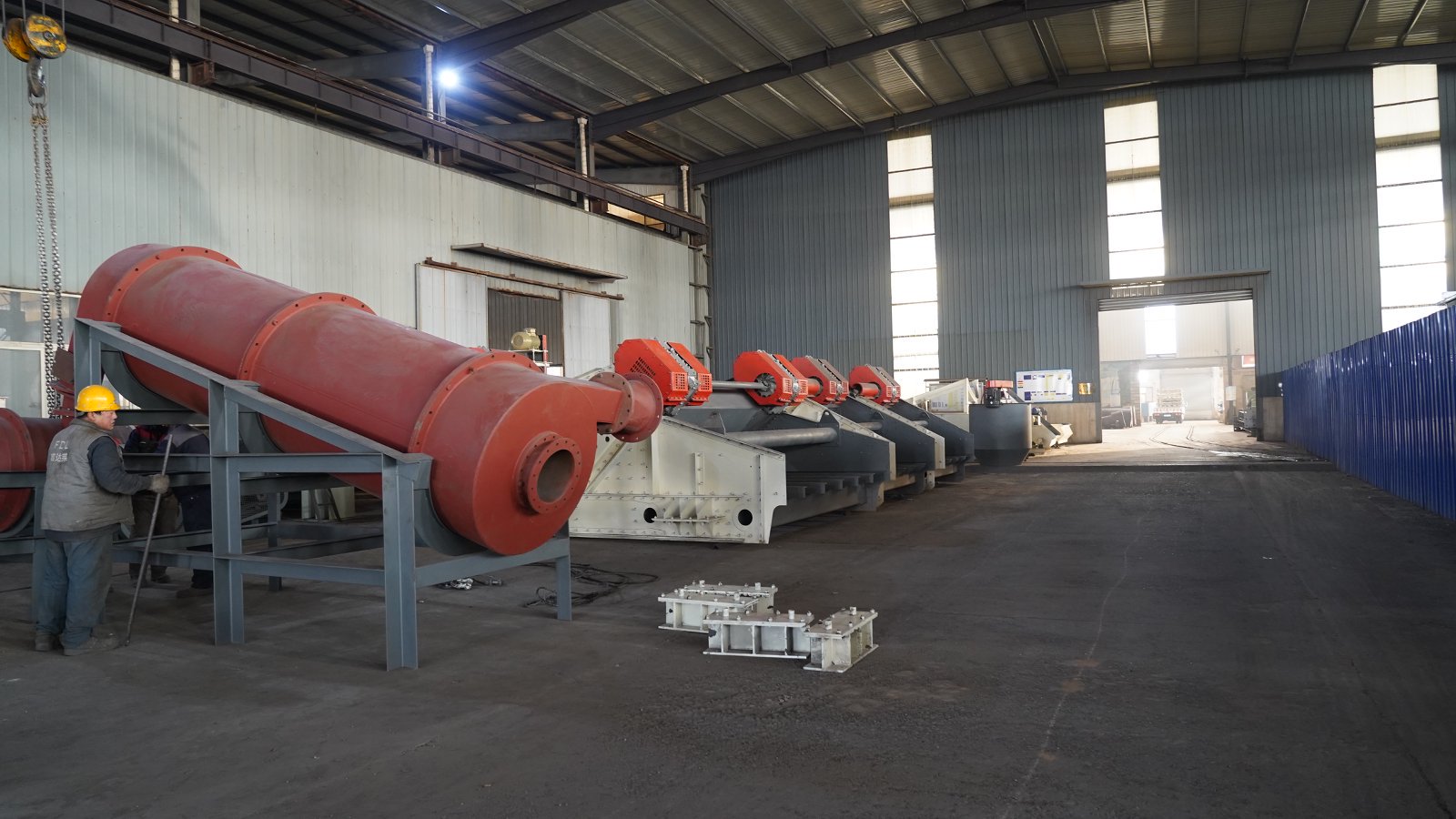
Several factors influence the efficiency and reliability of the KQT-C dry-process jig. Feed characteristics—particle size distribution, density, and moisture content—directly affect separation quality. Maintaining uniform feed flow and consistent jigging motion is essential to achieve precise stratification and minimize losses.
Operational stability also relies on routine maintenance, timely replacement of wear components, and alignment of critical moving parts. Energy efficiency is closely tied to optimal stroke settings and load balance, ensuring that the equipment delivers high throughput without excessive power consumption.
Selecting a reputable supplier is critical for achieving sustained operational performance. Suppliers should have documented experience in delivering industrial-scale KQT-C dry-process jigs and provide verified performance data. Quality control, material traceability, and adherence to manufacturing standards are essential.
Comprehensive support, including installation, commissioning, training, and process optimization guidance, ensures that equipment achieves target recovery rates and maintains consistent output. A reliable supply chain for spare parts and wear components minimizes downtime and protects long-term production efficiency.
Operators often encounter challenges such as feed variability, abrasive materials, and balancing high throughput with product quality. Legacy equipment may struggle to maintain consistent separation performance, leading to material losses or off-spec product.
Maintenance complexity can also be a concern, especially in continuous high-capacity operations. The KQT-C dry-process jig addresses these issues through robust construction, modular components, and accessible maintenance points, allowing rapid inspections and replacements without disrupting continuous operation.
The KQT-C dry-process jig is widely applied in coal, base metals, and industrial mineral processing. In coal plants, it efficiently separates fine and coarse fractions while minimizing moisture content, enhancing combustion efficiency. Base metal operations, including copper, iron, and lead processing, benefit from its precise density-based separation.
Industrial mineral facilities processing quartz, feldspar, or kaolin achieve consistent particle size and high purity, meeting stringent quality standards. Remote or water-scarce mining sites also benefit from dry-processing capability, enabling continuous operations without extensive water infrastructure.
Industry trends emphasize automation, real-time monitoring, and energy optimization. Sensors and control systems allow operators to track performance, detect deviations, and adjust stroke frequency, feed rate, or stratification parameters in real time.
Future developments are likely to focus on increased modularity, predictive maintenance, and integration with intelligent plant management systems. Innovations in wear-resistant materials, energy-efficient actuation mechanisms, and process automation will enhance durability, operational flexibility, and recovery rates, supporting sustainable and cost-effective mineral processing operations.
What makes the KQT-C dry-process jig suitable for continuous use?
Its durable construction, wear-resistant components, and precision engineering allow stable operation over extended periods without frequent downtime.
Can it handle variable feed characteristics?
Yes, adjustable stroke control and optimized jigging frequency enable the equipment to maintain high recovery and consistent product quality under changing feed conditions.
Is maintenance complicated for high-capacity operations?
Modular design and accessible wear components simplify inspection and replacement, allowing continuous operation with minimal disruption.
Tel : 13903259923
E-mail : jinzexuanmeijixie@gmail.com
Address : 1.6 km south of Xinjichang Road,
Tangshan City, Hebei Province, China

Copyright © 2017.Company name All rights reserved.More Templates


This website uses cookies to ensure you get the best experience on our website.

 Español
 Pусский
 Tiếng Việt
 Монгол



 WhatsApp
 Phone
Phone
Comment
(0)